
Published on: Feb 17, 2026 by Jacob Peters, CPA, MST
Updated on: September 3, 2026
| Highlights: |
|
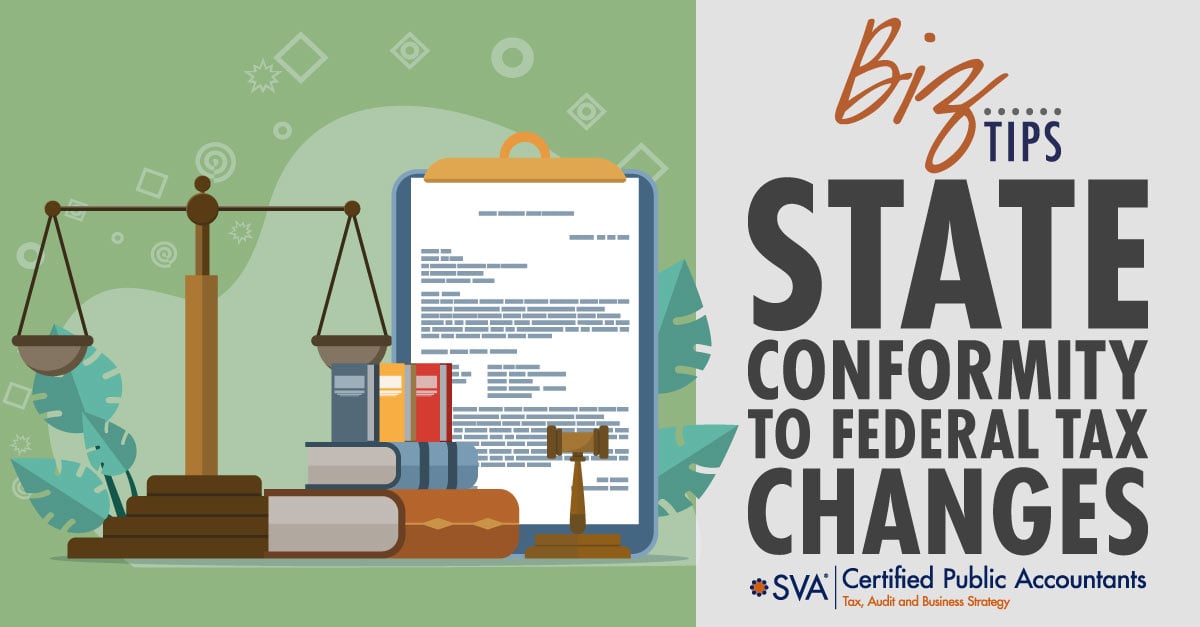
As a small business owner, it’s important to understand how states follow federal tax changes, what to watch for, and how federal tax legislation may affect state deductions, expensing, and compliance differently, depending on where the business operates.
Federal tax policy doesn’t always automatically apply at the state level. Differences in federal and state legislation may lead to unexpected taxable income adjustments, higher compliance costs, and audit exposure.
There are a few ways states determine conformity to federal tax legislation changes:
| Rolling | States automatically follow federal tax changes unless they pass legislation to opt out (decouple). OBBBA changes will generally apply immediately. |
| Static - Current | States follow federal tax changes as of a fixed date unless state legislation is passed. “Current” indicates conforming to a version of the IRS as it existed either December 31, 2024, or January 1, 2025 (pre-OBBBA). |
| Static - Lagged | States follow federal tax changes as of a fixed date unless state legislation is passed. OBBBA changes will not apply until state legislation updates the conformity date. |
| Selective | States largely design their own income tax codes and essentially pick and choose which federal tax provisions to adopt. OBBBA changes may be adopted partially or not at all, creating compliance complexity. |
There are four key business expensing provisions in OBBBA that SVA is monitoring for state conformity:
| Section 168(k) Bonus Depreciation | Full expensing provision for machinery, equipment, and certain other tangible property is restored to 100% and made permanent. |
| Section 174 Research & Experimentation Cost Recovery | Reversal of requirement to amortize research and experimental expenditures, restoring immediate cost recover for research and development costs. |
| Section 168(n) Qualified Production Property Deduction | A new provision created to provide first-year expensing for qualified production property (e.g., factories). |
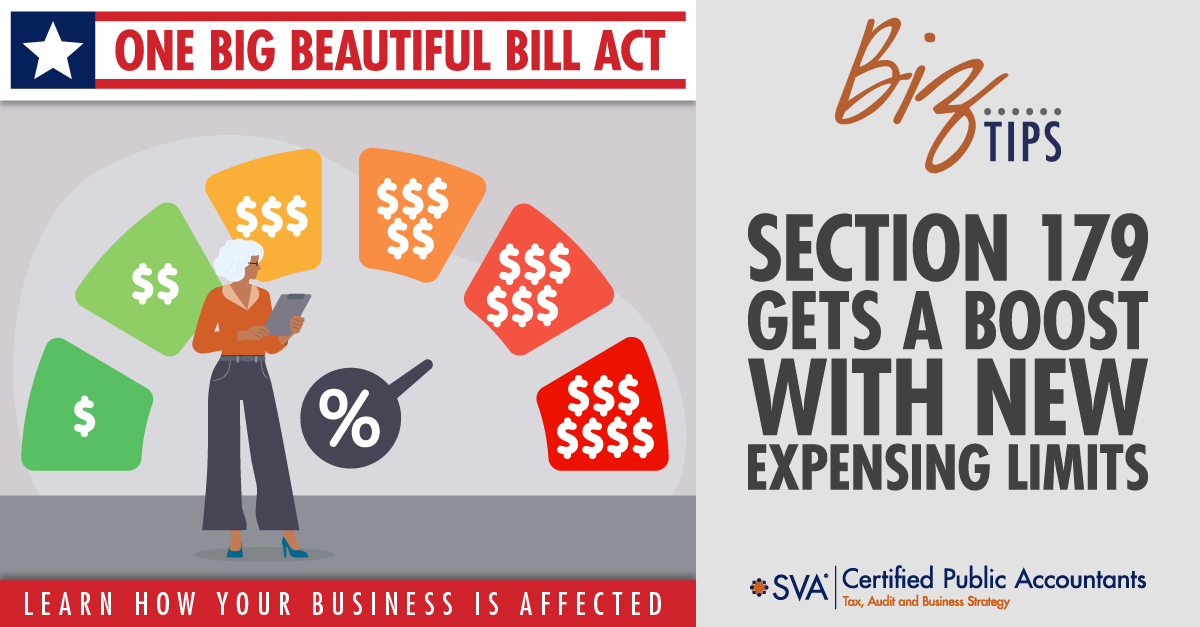
| Section 179 Small Business Expensing | Increase to the cap for small business from $1 million to $2.5 million. |
There are also many international tax provisions impacted by OBBBA that have surprising implications for state codes, further increasing the complexity of state tax compliance.
 |
 |
 |
| Bonus Depreciation is Back: What Business Owners Need to Know | R&D Tax Credit Changes Business Owners Need to Know | Section 179 Gets a Boost With New Expensing Limits |
Given the variation in how states conform to federal tax changes, small business owners should take a proactive approach to planning and compliance. Understanding state-specific differences can help reduce risk, improve cash flow management, and avoid unexpected tax liabilities.
Key areas to focus on include the following:
| Identify State Filing Requirements and Exposure | If you operate in more than one state, expect differences and plan accordingly. |
| Review Depreciation and Research Expensing | Differences between federal and state rules can affect taxable income and estimated tax payments. |
| Model the Cash-Flow Impact and Monitor Legislative Updates | Each state has a different approach. We can help run projections for each state to determine the impact to your bottom line. Proactive planning will reduce underpayment penalties and interest, keeping more cash in your business. |
As federal tax legislation continues to evolve, differences in state conformity can create unexpected challenges for small business owners. SVA continues to track state responses to OBBBA and other federal tax developments.
If you have questions about how these changes may affect your business, an SVA professional can help you evaluate your state tax position, model potential impacts, and develop a strategy that supports your long-term goals.

Share this post:


Jake is a Principal with SVA Certified Public Accountants. He uses his extensive experience to provide clients with guidance and consulting in areas such as federal and state income tax planning, debt forgiveness, Roth IRA conversions, energy efficiency tax incentives, and multi-state tax compliance.
Get Weekly Biz Tips Delivered Straight to Your Inbox!





Madison, WI
1221 John Q Hammons Dr, Suite 100
Madison, WI 53717
(608) 831-8181
Milwaukee, WI
18650 W. Corporate Drive, Suite 200
Brookfield, WI 53045
(262) 641-6888
Colorado Springs, CO
10855 Hidden Pool Heights, Suite 340
Colorado Springs, CO 80908
(719) 413-5551



Copyright © 2026 SVA Certified Public Accountants | Privacy Policy | Cookie Policy | CCPA